
Friday, April 17, 2020
The Fine Art of Glassmaking: History and techniques
There is a variety of ancient glass making techniques, such as casting, core forming, mosaic, inflation, mold blowing, cameo carving, incising, and cutting. All these techniques are still used by glass artist today.
Three main ingredients of ancient glass are silica, from beach or river sand; soda (sodium carbonate),
found in the mineral natron and in the ashes of certain plants, and lime, from seashell debris in beach sand. When heated to at least 1300 degrees F, these elements melt together to form glass. While in a molten state, glass is manipulated in a variety of way to create vessels.
Casting and Core Forming
The earliest know glass objects date to about 2500 B.C. and was found in Mesopotamia (present-day Iraq and western Iran). They were made by casting in an open old or by core forming, a technique in which a ceramic-like core formed around a metal rod was encased in glass. These processes were used for more than 1,500 years.
Mosaic Glass
Like a mosaic made of stone, mosaic glass is comprised of a number of small pieces, sliced from canes (rods) of glass. Canes could be multicolored, formed from rods of different colors, which were fused together and manipulated into patterns. Ribbon glass were created by fusing lengths of cane placed side by side. Marbled glass was fashioned from multiple colors that were melted to mimic veined and banded stones such as marble and agate.
Inflation
In the mid-first century B.C., glassmakers in the environs of jerusalem discovered that molten glass could be inflated into a bubble at the end of a hollow tube. This blowing technique revolutionized the
glass industry. The process allowed vessels to be make quickly and less expensively, and in the first century A.D. glassware began to replace clay vessels for household use.
Mold Blowing
Toward the end of the first century B.C., vessels were manufactured by inflating glass into molds. Mold-blown objects were decorated in relief with the designs carved into the molds, which were made either as a single piece (a dip mold) or in multiple parts— some had up to six panels, plus a base section. The materials used to construct molds include stone, clay, bronze, and plaster. Molds were reused, and it is possible to determine which vessels were produced in the same mold by taking precise measurements.
Decorating Blown Glass
Various techniques were employed to embellish inflated glass vessels. Pincers and tongs were used to pinch, pull, or push the glass into different shapes and designs. Trails of glass were often wound around the body to created snakelike patterns and to add handles, rims, and feet. Splashware was created when a vessel being formed was rolled into multicolored chips that fused to the body and expanded during inflation. Cut and incised decoration, done after a vessel had colored, ranged from sharp, overlapping facets resembling carved rock crystal to inscriptions and pictorial scenes composed of thin linen.
Browse luxury art glass available for sale at https://www.zcollector.com
Monday, February 23, 2015
What Zcollector is Saying About Lalique's "Eternal" Collection
Lalique never disappoints in the measure of wonder and beauty. The French luxury brand recently unveiled its marvelous collaboration with British artist, Damien Hirst. And what an amazing collection it is. The butterfly is dear to the hearts of René Lalique and Damien Hirst. Titled "Eternal," the collection consists of exquisite, limited edition crystal panels in three series – Love, Hope, and Beauty – each depicts a different butterfly and comes in twelve different colors.
Th collection adds to Lalique list of masterpieces. The workmanship is brilliant –– from the fluid lines and dazzling colors to the captivating way light softy illuminates through the panels –– the artwork invokes the splendor and subtly of the magical and paradoxical beauty of the butterfly, ephemeral and eternal at the same time.

In the new Lalique global campaign, Damien Hirst shares his stories of inspiration and dedication, a journey driven by his desire to keep breaking new ground. "It’s amazing being able to use all the expert craftsmanship and incredible history of Lalique for something new, and the results are beyond all my expectations."
He added: "I see butterflies as souls and part of a wider visual language. I’ve always described them as universal triggers; everyone loves them because of their incredible abstract fragility and beauty. It’s an interesting example of how we use nature to try and express the inexpressible: love, desire, belief and the eternal. Butterflies are used in Christian iconography to symbolize the resurrection, and by the ancient Greeks, for the soul. I’ve always loved that they look identical in life and in death, but when the light shines through these panels, it feels like they’re brought back to life in some way.”
Lalique has seemingly mastered the delicate balance of honoring their style legacy while moving away from tradition. By collaborating with Hirst, and other avant-garde artists, the process uniquely integrates tradition and modernity, thereby creating a buzz that is continually stoked while it refreshes Lalique's luxury brand for future longevity.
The panels will be on display at Lalique's stand at Maison&Objet in Paris (January 23rd-27th) and in their Paris store from Friday 23rd January (11 rue Royale, 75008). They will be unveiled at Lalique's London boutique in February (47 Conduit Street, W1S 2YP).
For more information, please visit Lalique's website.

Wednesday, May 22, 2013
The Lure of Maritime Treasures
Bonham's presents these unique items for auction in June:

MAHOGANY AND BRASS TUFTED LEATHER DECK CHAIR
Via bonhams.com/auctions/20970

A BRITISH WOOLWORK PICTURE OF A SHIP


PAIR OF 19TH C. DUTCH DEFT BLUE AND WHITE PLATES FEATURING NAUTICAL SCENE
Via franywaide

BLOWN GLASS BOTTLE FEATURING NAUTICAL MOTIF
Via empireantiques

RARE 18TH CENTURY SHIP WINCH
Via westerhoffantiques
Thursday, April 11, 2013
Unique or Emerging Artists to Consider
While a primary interest of mine is the 19th century painters of Orientalist and the Hudson River School, I am inevitably linked to the works of contemporary artists.
I am excited to discover the breadth and quality of top-tier artists who have undergone the rigorous training required to master centuries-old painting techniques and apply them with a distinct personal artistic vision. Their works contribute a unique richness to fine art. Here are selected works exhibiting a distinct quality of spirit and exuberance, which I believe the art aficionado will connect with on a personal, aesthetic, or intellectual level.
 |
PHOEBE BRUNNENBrunner conveys a mysterious fantasy of esthetic pleasure with elegance and strength. Her canvas comes alive with bursting masses of meticulously painted colors while it dances to a poetic emotion. |
 |
SONYA FAIRBANKS |
With fluid elegance, Fairbanks depicts still life studies in a compelling way.
Her disciplined depictions of everyday objects take on extraordinary life of
elegant Simplicity.
 |
LIZ HAYWOOD-SULLIVAN |
Massachusetts artist, Lyn Haywood-Sullivan, achieves effects like flares softly
illuminating the night. Her paintings are defined by strong contrasts, dramatic
lighting and graphic compositions .
Sunday, December 2, 2012
Creating Visual Wonder in Your Garden
Celebrating iconic design for home and garden

Build your style legacy with an iconic piece
Dramatic design makes this superb bench simply unforgettable. This imposing Renaissance style limestone garden bench yields visual wonder, making it a perfect focal point to enhance a garden setting. This extraordinary semi-circular bench could still be acquired just in time for the holidays.
Bonhams.com
Monday, October 29, 2012
The Return of Orientalism
19th Century European Art Auction | Orientalist painting
William-Adolphe Bouguereau (French, 1825-1905)
Student of Francois-Edouard Picot (François-Edouard Picot) (1786-1868)

'Marchande de grenades'
45½ x 35 in. (115.6 x 88.9 cm.)
Estimate (Set Currency)
$2,500,000 - $3,500,000
www.christies.com/salelanding/index.aspx?intSaleID=2357works of which the present lot is arguably the most sophisticated example. Having already made a name for himself with his poignant portraits of the
French peasantry, Bouguereau began experimenting with Eastern subjects in 1870 with Jeune fille orientale. Bouguereau's careful attention to the
young woman's gleaming jewelry, intricate vest, delicately tied sash and draped fabrics, shows the artist reveling in the possibilities offered by this
new foreign subject. He wasn't just the best ever at painting fine details, more importantly, he captured the tender and subtlest nuances of personality
and mood. Yet, it would be another five years before Bouguereau returned to painting the East with L'Orientale à la grenade. In this later work,
Bouguereau eliminated all contextual details and instead focused just on the figure of what is most likely an Egyptian girl. The girl's intended
ethnicity is suggested only by her elaborate silver jewel.

'L'ORIENTALE À LA GRENADE' (GIRL WITH A POMEGRANATE)
23 1/2 by 18 in. 59.6 by 45.7 cm
SOLD. 2,322,500 USD (Hammer Price with Buyer's Premium)
Earlier this year, L'Orientale à la Grenade (1875), a portrait of a turbaned young woman with a pomegranate— an Orientalist subject
likely inspired by artifacts and second-hand reports, since the artist never traveled to the Middle East—sold for $2.3 million, considerably
more than its $700,000 pre-sale high estimate. The picture was once in the collection of the Art Institute of Chicago (from 1900 to 1907)
and most recently exhibited at Portland, OR Art Museum.
www.zcollector.com
Sunday, October 14, 2012
Antiques Shows
It
is that time of year which is revered by the antiques aficionado to
sail into a world of elegance where old objects are never passé. This
season, antiques take center stage with an exciting line-up of
prestigious shows across the nation. The events are quite fascinating. I
think designers and collectors alike are enthralled not only by the
exceptional quality works of art but also for acquiring knowledge to better
know the things they love.

SWEDEN 1950's SCULPTURAL SOFA BY CARL MALMSTEN
HOSTLER AND BURROWS
The International Fine Art and Antique Dealers Show
NEW YORK—The International Fine Art and Antique Dealers Show opens to the public October 19-24, 2012 at the Park Avenue Armory at 67th Street, New York. Preview party October 18 benefitting The Society of Memorial Sloan-Kettering Cancer Center. Collectors, designers, or those just interested in acquiring the relics of a bygone era, can view and buy the treasured finds displayed by distinguished antiques dealers. All works are for sale under the strictest vetting conditions.
Opening Hours:
Friday, 19th October:11am - 7.30pm
Admission:
$20 (Tickets available at the door).
Address:
The Park Avenue Armory
Park Avenue at 67th Street
New York, NY
USA
Telephone
New York:+ 1 212 642 8572
London:+ 44 (0)20 7389 6555
Organizers Office:+1 646 619 6030 (from 15th October)
Fax
New York:+ 1 212 877 0066
London:+ 44 (0)20 7389 6556
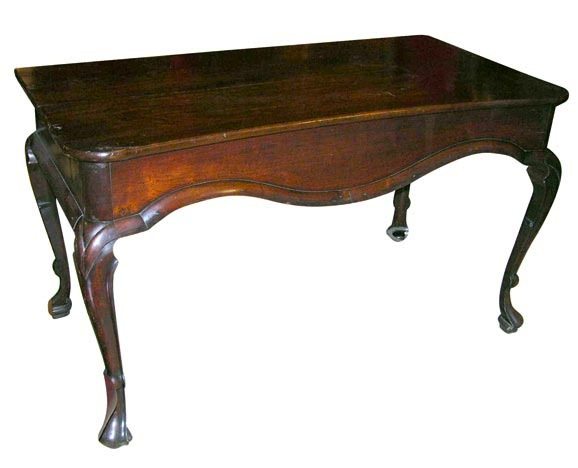
EARLY AND IMPORTANT IRISH GEORGIAN CONSOLE TABLE
YEW TREE HOUSE ANTIQUES
The San Francisco Fall Antiques Show
SAN FRANCISCO—The San Francisco Fall Antiques Show opens to the public October 25-28, 2012 at the Festival Pavilion, Fort Mason Center, San Francisco. Preview party benefit gala,
October 24 benefitting Enterprise for High School Students.
Opening Hours:
Thursday - Saturday 10:30 am - 7pm
Sunday - Noon to 5 pm
Admission:
$15 (Tickets available at the door).
Location
Festival Pavilion, Fort Mason Center
Fort Mason Center is located in the beautiful Marina district, between Fisherman's Wharf and the Golden Gate Bridge on San Francisco Bay. The entrance to Fort Mason Center is at the intersection of Marina Boulevard and Buchanan Street. A former military base, this National Historic Landmark is part of the Golden Gate National Recreation Area and, therefore, has no street address.

49th Annual Delaware Antiques Show
DELAWARE—Delaware Antiques Show opens to the public November 9-11, 2012 at the Chase Center on the Riverfront, Wilmington, Delaware. Opening party November 8, benefiting Educational Programming at Winterthur.
Join Keynote speaker Carolyne Roehm, one of America's most important tastemakers, known for her extraordinary contributions to interior design, fashion, and entertaining.
New to Collecting?
The Delaware Antiques Show provides a wonderful learning environment for those who are new to collecting as well as for antiques experts. Look for "Find!" signs that highlight objects of special interest and value. The dealers are always open to answering questions and providing information.

SWEDEN 1950's SCULPTURAL SOFA BY CARL MALMSTEN
HOSTLER AND BURROWS
The International Fine Art and Antique Dealers Show
NEW YORK—The International Fine Art and Antique Dealers Show opens to the public October 19-24, 2012 at the Park Avenue Armory at 67th Street, New York. Preview party October 18 benefitting The Society of Memorial Sloan-Kettering Cancer Center. Collectors, designers, or those just interested in acquiring the relics of a bygone era, can view and buy the treasured finds displayed by distinguished antiques dealers. All works are for sale under the strictest vetting conditions.
Opening Hours:
Friday, 19th October:11am - 7.30pm
Admission:
$20 (Tickets available at the door).
The Park Avenue Armory
Park Avenue at 67th Street
New York, NY
USA
Telephone
New York:+ 1 212 642 8572
London:+ 44 (0)20 7389 6555
Organizers Office:+1 646 619 6030 (from 15th October)
Fax
New York:+ 1 212 877 0066
London:+ 44 (0)20 7389 6556

EARLY AND IMPORTANT IRISH GEORGIAN CONSOLE TABLE
YEW TREE HOUSE ANTIQUES
The San Francisco Fall Antiques Show
SAN FRANCISCO—The San Francisco Fall Antiques Show opens to the public October 25-28, 2012 at the Festival Pavilion, Fort Mason Center, San Francisco. Preview party benefit gala,
October 24 benefitting Enterprise for High School Students.
Opening Hours:
Thursday - Saturday 10:30 am - 7pm
Sunday - Noon to 5 pm
Admission:
$15 (Tickets available at the door).
Location
Festival Pavilion, Fort Mason Center
Fort Mason Center is located in the beautiful Marina district, between Fisherman's Wharf and the Golden Gate Bridge on San Francisco Bay. The entrance to Fort Mason Center is at the intersection of Marina Boulevard and Buchanan Street. A former military base, this National Historic Landmark is part of the Golden Gate National Recreation Area and, therefore, has no street address.
ANOTHER SHOW NOT TO BE MISSED...

DELAWARE—Delaware Antiques Show opens to the public November 9-11, 2012 at the Chase Center on the Riverfront, Wilmington, Delaware. Opening party November 8, benefiting Educational Programming at Winterthur.
Join Keynote speaker Carolyne Roehm, one of America's most important tastemakers, known for her extraordinary contributions to interior design, fashion, and entertaining.
New to Collecting?
The Delaware Antiques Show provides a wonderful learning environment for those who are new to collecting as well as for antiques experts. Look for "Find!" signs that highlight objects of special interest and value. The dealers are always open to answering questions and providing information.
Wednesday, August 29, 2012
How to Build an Art Collection With Confidence

Firenze-Piazza Signoria photography by Elizabeth Carmel Fine Art
Since this is a subjective exercise, with an intent to be objective, I will do my best. My point of view will help you in the process.
Exceptional collections have been built on a single guiding principle: discerned collectors who focus on one subject, procuring the very best to form a comprehensive collection, which is remarkable for its cultural and chronological breadth. Others choose the very best in a variety of fields, creating strong artistic tensions that deliver tantalizing visual harmony through dramatic contrasts.
Visual harmony aside, the collecting process entails an abiding passion and interest. Purchasing art and antiques versus procuring art and antiques distinctly differs. The latter entails forming relationships with dealers, keeping abreast with your chosen genre, and checking on what ''your'' artists are creating. More importantly, to assemble a remarkable collection requires passion, imagination, persistence, not to mention patience. These are the hallmarks of the true collector.
If you are a beginner to the world of art and antiques, the best way to get started is to seek out works of reference with concise information on the subject. Additionally, museums, auction previews, galleries, and antique shops all afford excellent exposure. Some museums offer workshops to enable the collector to gain hands-on knowledge of the works exhibited in the museum. Like a good gust of wind, the experience will shed new perspective. Curiosity is an asset. Let it guide you to areas of collecting, even if it is unfashionable at times. Doris Duke among others had amassed a significant collection by doing so. Learn terminologies of the trade, and ask questions. It is important to remember you can never know too much when collecting art and antiques . Albeit it is a gamble whether that knowledge will pay off in the form of increased net worth, you can be assured it will broaden your horizons and beautify your surroundings.
Keep in mind a collection endures over time as a result of authenticity, rarity, condition and aesthetic appeal. More importantly, these are not the only prerequisites of a memorable collection. There must always be an added factor that raises a collection of great works - objects that amuse and capture the imagination. It is fascinating to witness how even the most classical of objects can evoke a dialogue with 20th Century paintings. The communication which can occur between the world of the senses and the world of ideals builds clever bridges between periods and genres. This quality of quintessence is a measure of longevity, and it creates a measurable buzz.
www.zcollector.com
Tuesday, July 10, 2012
Design that Endures
THE LANGUAGE OF BALANCE: Harmony is dependent upon proportion; it is the dominant element in all arts of design. The attempt to formulate laws of proportion was first made by the Greeks, through whose unique genius the whole realm of human thought and emotion found expression.
Design that Transcends What's in
and What's Out
By the middle of the 18th century, the rediscovery of ancient Greek art and architecture turned the artistic tastes of Europe in a new direction, which began the movement known as Neoclassical. A similar admiration came about for the art of ancient Rome via the excavations of the towns of Herculaneum and Pompeii in the 1730s and 1740s respectively. The classical ideals of order and moderation which inspired this period, its realistically limited aspirations, and its emphasis on the common sense of society rather than individual imagination, could all be characterized as rational. And, indeed, it is often known as the Age of Reason.
Development of artistic forms is conjoined with the political movements of the era. Politics spawns stylistic innovations, setting the tone for a domestic style - one of elegance and simplicity. While the early 18th century Rococo style was associated with aristocracy, the neoclassical style emerged as a revolt against the ornate aesthetic qualities, condemning the aristocratic qualities rococo came to represent. Neoclassic is a return to a noble, more sober Classicism characterized by order, symmetry, and simplicity of style. The design is subtle; the statement is anything but. Neoclassical remains one of the most influential of all design styles.
Development of artistic forms is conjoined with the political movements of the era. Politics spawns stylistic innovations, setting the tone for a domestic style - one of elegance and simplicity. While the early 18th century Rococo style was associated with aristocracy, the neoclassical style emerged as a revolt against the ornate aesthetic qualities, condemning the aristocratic qualities rococo came to represent. Neoclassic is a return to a noble, more sober Classicism characterized by order, symmetry, and simplicity of style. The design is subtle; the statement is anything but. Neoclassical remains one of the most influential of all design styles.
France was first to embrace this new order of design, which is exemplified in three phases: Louis XVl , Directoire and Empire style. In England this new order of design corresponds with late Georgian and Regency periods, and the Federal period in newly formed United States of America. At similar time in northern Europe, Biedermeier furniture, an influential style of similar order, originated from Vienna to Stockholm, encompassing Germany, Scandinavia, Russia and the Austrian-Hungarian Empire. There are, however, many regional variations to the furniture. Although the best Biedermeier furniture was produced between 1820 and 1830, the period is regarded as extending from 1815 to 1848. In continental Europe, however, the rediscovery of Biedermeirs at the end of the nineteenth century has exerted a virtually continuous influence upon architects and designers. This continued into the early years of the twentieth century, when it began to influence Josef Hoffmann, the Bauhaus school, Art Deco, Le Corbusier and others.
Today, these understated styles still remain time-proven pieces that never fade, bringing a classically based, yet fresh and modern aesthetic to a room. Collectors and designers across the globe favor the subtle elegance coupled with the ease to combine furniture of varying quality and provenance. Some designers excel in designing this way, creating interesting combinations and unexpected juxtapositions.
So, whether it’s the classic look or minimalist to modern - these classical styles stand the test
of time — exuding timeless elegance. Investment pieces which can be passed down through generations.
Subscribe to:
Posts (Atom)